Abstract
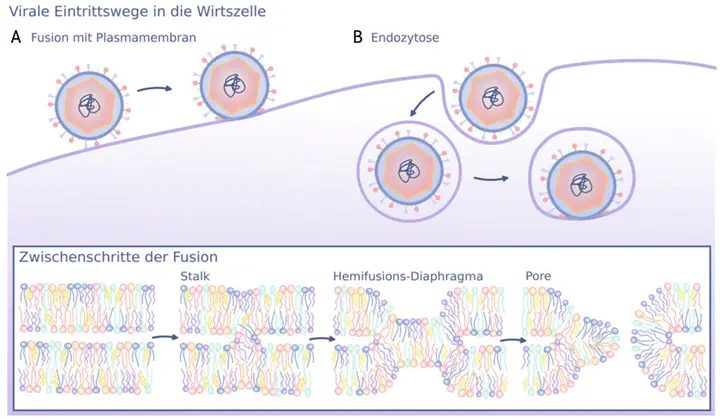
Biological membranes display remarkable compositional diversity with functional consequences. In viral infections, lipids play active roles beyond forming a structural barrier: they modulate fusion protein binding, and tune membrane mechanics to prime them for efficient fusion, while viruses hijack host lipid metabolism to support replication. This highlights how membrane remodeling is exploited throughout the viral life cycle and points to potential avenues for antiviral intervention.
Type
Publication
BIOspektrum

Katharina Scherer
PhD student